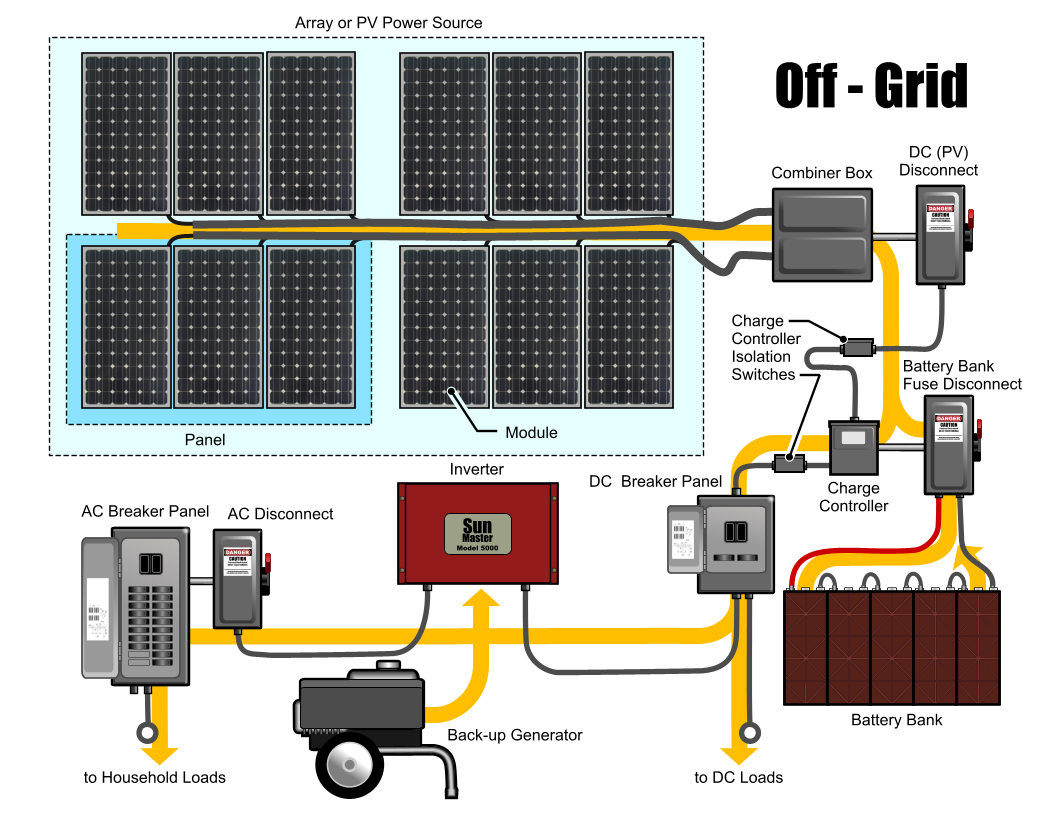
A typical off-grid solar system for residences and farms is a self-sustaining setup designed to operate independently of the utility grid, making it ideal for remote locations, rural homes, and agricultural properties with unreliable or nonexistent grid access. The main components include solar panels to capture sunlight, a charge controller to regulate energy flow, batteries to store excess power, and an inverter to convert DC to usable AC electricity. During daylight hours, solar panels generate energy, which is used directly or stored in batteries for use at night or during cloudy periods. This system grants complete energy independence, reliable backup power during outages, and flexibility in choosing installation location, whether for farm irrigation pumps or household appliances. While the initial investment and battery maintenance are higher than on-grid systems, off-grid solutions offer unmatched autonomy, allowing users to produce, regulate, and consume their own clean electricity, reducing reliance on conventional power sources and supporting a sustainable lifestyle.
Advantages of Off-Grid Solar Systems
Off-grid solar systems offer significant advantages, especially for users in remote or rural areas. They provide complete energy independence, freeing homeowners and farms from reliance on the local utility grid and protecting them from rising electricity costs. These systems ensure reliable power supply even in areas prone to outages, extreme weather, or where grid extension is impractical. Off-grid solar is environmentally friendly, supplying 100% renewable energy and eliminating carbon emissions associated with traditional power generation. While the initial setup cost is higher, savings accumulate over time with no monthly utility bills and lower maintenance, making it a long-term sustainable investment. This solution empowers users to be self-sufficient, resilient, and contribute to a greener future.