

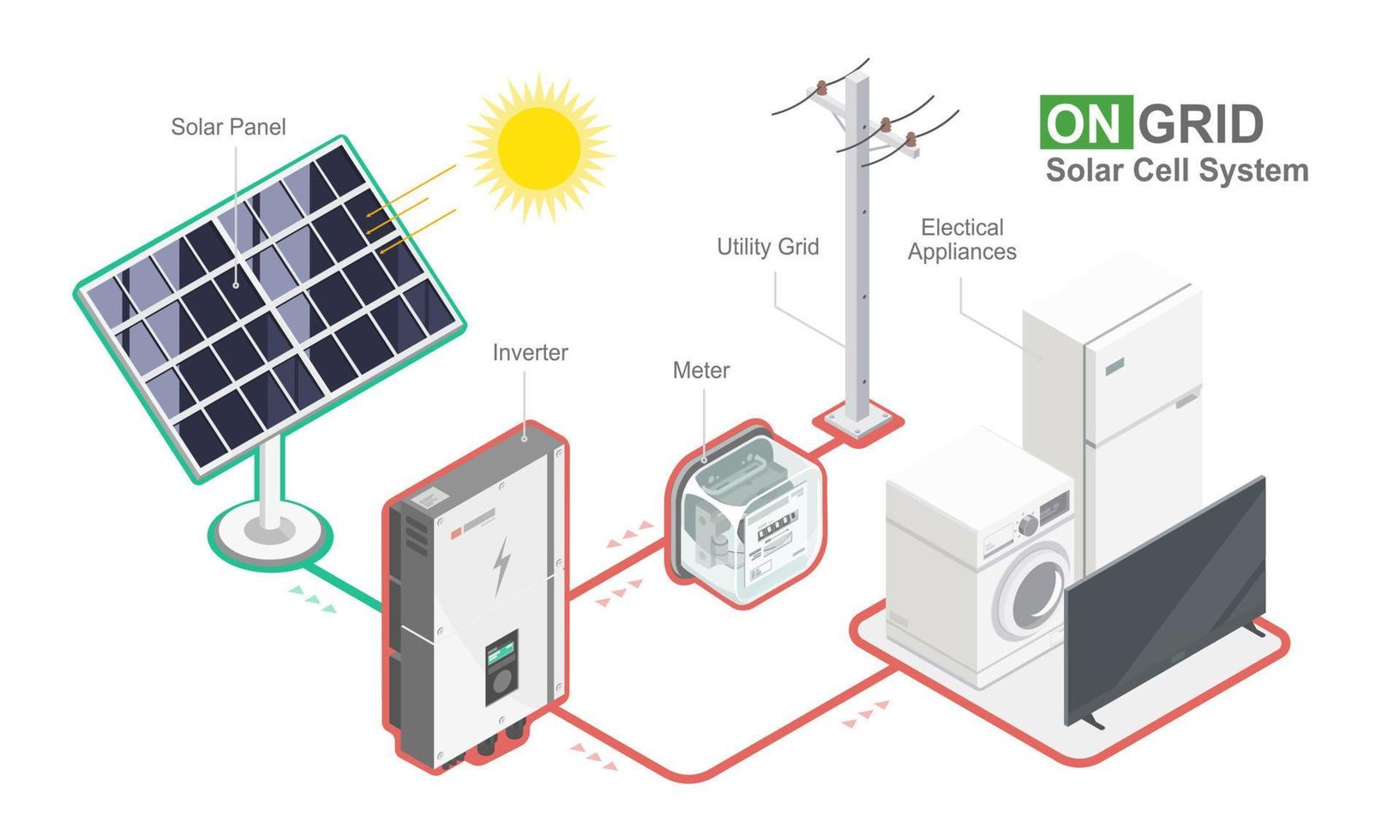
A typical on-grid solar system for residences and commercial projects seamlessly integrates renewable energy with the local electricity grid, offering a reliable and cost-effective solution for modern power needs. The system consists of solar panels that capture sunlight and convert it into DC electricity, which is then transformed into usable AC power by an inverter. Net metering is a key feature—excess electricity generated is fed back into the grid, earning credits or reducing utility bills for the user. These systems do not require battery storage, making them more affordable and easier to maintain for homes, offices, and businesses. On-grid solar installations help users significantly cut down on electricity expenses, increase property value, and promote sustainable living while ensuring continuous power even during fluctuations or limited sunlight
Advantages of On-Grid Solar System
On-grid solar systems offer several compelling advantages for both residential and commercial users. They significantly reduce electricity bills by harnessing solar energy and allowing users to export surplus power to the grid, often earning credits through net metering. These systems also benefit from grid reliability, ensuring stable power supply even during periods of low sunlight, and are easily scalable to meet changing energy needs. Additionally, government incentives and rebates further enhance the financial viability and return on investment for those adopting on-grid solar solutions.